How Long Can a Cesspool Last, and What Affects Its Lifespan?
There’s no single answer to how long a cesspool lasts. Here’s what actually determines lifespan and when it makes sense to have an aging system evaluated.

Driving through the older neighborhoods of the East End, the estates in Southampton, the historic streetscapes in Sag Harbor, the established residential blocks throughout the Hamptons, it’s easy to focus on what’s visible: well-maintained homes, mature landscaping, properties that have clearly been cared for over decades. What’s less visible is what’s underneath those properties, and in older neighborhoods, that underground infrastructure is often a far more complicated story than the surface suggests.
Older home septic problems aren’t just about systems that need pumping. They’re about systems that were designed for a different era of plumbing, different household sizes, different water usage patterns, and in many cases, different regulatory standards entirely. Understanding those challenges is the first step toward addressing them before they become urgent.
Fun Fact: Many properties on Long Island’s East End still have cesspool systems that predate the regulatory changes of the 1970s and 1980s that required more sophisticated wastewater treatment standards, meaning some systems in older neighborhoods have been operating for 40 to 60 years with varying degrees of maintenance and no major infrastructure updates.
A septic system installed in the 1960s wasn’t designed around today’s household water usage. Modern dishwashers, high-efficiency washing machines, and multiple full bathrooms per household send volumes through a system that its original designers never anticipated. An older cesspool sized for a modest mid-century household may be genuinely undersized for the way the same property is used today, regardless of how well it’s been maintained.
The materials used in older cesspool construction, primarily brick and concrete, degrade over decades in ways that aren’t visible from the surface. Brick cesspools in particular are prone to mortar deterioration, where the joints between bricks gradually break down from years of exposure to moisture, soil movement, and the chemical environment inside the pit.
Quick Fact: A cesspool pit that has experienced significant mortar deterioration can appear structurally sound from above while the walls have lost much of their integrity, which is one of the reasons professional inspection matters more for older systems than a simple visual check of the access point.
Concrete systems face their own deterioration pattern, particularly in areas with high groundwater or acidic soil conditions. Cracking, spalling, and gradual wall collapse are more common in systems that have been in service for several decades without structural assessment.
Older systems were typically sized according to the regulatory standards of their installation era, which often assumed lower per-person water usage than contemporary households generate. A property that has been expanded, converted from seasonal to year-round use, or simply occupied by a larger family than originally anticipated may be running a system that was never adequate for its current load.
This mismatch between system capacity and actual usage is one of the most common older home septic problems on the East End, where many historic properties have been significantly renovated and expanded while the underground infrastructure remained unchanged.
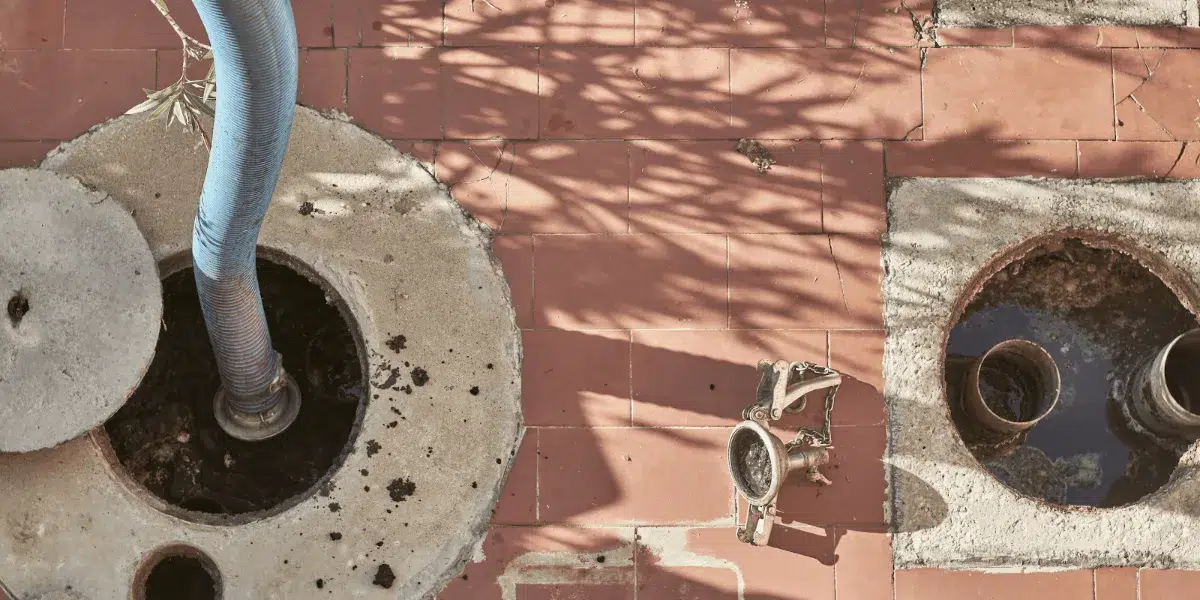
Beyond the pit itself, older systems often have inlet pipes, baffles, and access components made from materials that have long since been superseded. Clay pipes, cast iron components, and early concrete access risers all have known failure modes that become more likely as the decades accumulate.
| Component | Older Material | Common Failure Mode |
| Inlet/outlet pipes | Clay or cast iron | Cracking, root intrusion, joint separation |
| Baffles | Concrete | Deterioration, loss of flow control |
| Access covers | Heavy concrete slabs | Cracking, difficult access, safety concerns |
| Pit walls | Brick with mortar joints | Mortar deterioration, structural instability |
Older neighborhoods present a specific documentation challenge that newer developments don’t have. Systems installed decades ago may have no surviving permit records, no as-built diagrams, and no maintenance history that transfers with the property. Previous owners may have had the system pumped irregularly, or not at all, without any record of when service last occurred.
Fast Fact: In some older East End properties, the only reliable record of a cesspool’s location is the institutional memory of a long-standing local service provider, since original installation permits may be difficult or impossible to locate through county health department records for systems installed before consistent record-keeping practices were established.
For new owners of older properties, this documentation gap means the first professional assessment is less a routine check and more a genuine discovery process, establishing a baseline that may not have existed before.
The East End’s older housing stock has seen significant renovation activity over the decades, and renovation creates specific risks for aging septic systems that don’t always get accounted for in the project planning.
Adding bathrooms, expanding square footage, converting a seasonal cottage to a year-round residence, or installing a pool with associated changing facilities all add wastewater load to a system that was sized for a different property. Excavation and construction near an existing system can also physically disturb the surrounding soil or damage components without the crew or the owner realizing it until problems develop months later.
The soil and ground conditions that affect cesspool performance, covered in depth in how ground conditions affect your cesspool, become even more relevant during renovation projects, since construction activity can change drainage patterns and soil compaction in ways that affect system performance long after the project is complete.
Properties with aging cesspool systems benefit from a more proactive and thorough maintenance approach than newer installations. Routine pumping matters just as much, but professional inspections that look specifically at structural condition become increasingly important as a system ages.
For properties where the system’s history is unknown, a professional inspection is genuinely the starting point rather than something to schedule after a problem appears. Understanding what’s actually in the ground, its age, its condition, and whether its capacity still matches the property’s usage, gives owners the information they need to make sound decisions about maintenance, repair, or eventual replacement.
If an inspection has already identified issues, why recurring drain clogs may point to a bigger septic problem connects those surface symptoms to the underlying system conditions that older properties commonly present.
Older neighborhoods carry a specific kind of infrastructure uncertainty that deserves professional attention rather than optimism. Bay Area Sewer & Drain Service provides thorough cesspool and septic services throughout Eastport and the East End, with experience assessing the kinds of aging systems common to older Long Island properties. If an assessment reveals components that need updating, our septic system installation services and septic system treatments provide the right next steps. Contact Bay Area Sewer & Drain today for a free quote.