How Long Can a Cesspool Last, and What Affects Its Lifespan?
There’s no single answer to how long a cesspool lasts. Here’s what actually determines lifespan and when it makes sense to have an aging system evaluated.

Your kitchen sink is draining slowly, and you’re about to reach for a bottle of liquid drain cleaner. Before you do, there’s a question worth asking: what if the problem isn’t in the sink at all? Slow drains and backups can come from a simple pipe clog, sure. But they can also be the first visible sign that your cesspool or septic system is failing. Treating the wrong problem doesn’t just waste money. It delays the real fix while the underlying issue gets worse underground.
When multiple fixtures act up at the same time, your plumbing isn’t the problem. Your septic system probably is.
Homeowners on Long Island, especially those in older homes throughout Suffolk County, deal with a unique layer of complexity that most suburban plumbing guides don’t account for. Many of these properties rely on cesspool systems rather than municipal sewers, and cesspools behave differently from modern septic tanks. Understanding which system is responsible for the symptoms you’re seeing is the difference between a quick fix and a costly misdiagnosis.
The key insight is this: your plumbing system and your cesspool or septic system are connected, but they fail in different ways and show different patterns when something goes wrong. Once you know what to look for, the distinction becomes much clearer.
Your indoor plumbing handles water flow from fixtures through the pipes inside your home. Issues here tend to be localized, meaning one sink, one toilet, or one appliance acts up while everything else functions normally. Your cesspool or septic system handles everything after wastewater leaves the house. When this fails, it affects the entire home at once because all your indoor drains feed into the same system.
That’s the most reliable rule of thumb when trying to tell a drain issue from a septic problem: scope. One fixture having trouble points inward. Multiple fixtures struggling simultaneously points outward, toward the system buried in your yard.
| Symptom | Likely Plumbing Issue | Likely Cesspool or Septic Problem |
| Only one drain is slow | Yes | Unlikely |
| Multiple drains slow at the same time | Unlikely | Yes |
| Gurgling sounds when flushing the toilet | No | Yes |
| Sewage odor near drains or outside | Occasionally | Strongly indicates septic |
| Water backs up in the lowest drain of the house | Possible | Very common septic sign |
| Lush green wet patch in the yard | No | Yes, sign of overflow |
| Low water pressure or dripping fixtures | Yes | No |
| Toilet bubbles after you run the dishwasher | No | Yes |
Slow drain causes tied to the cesspool or septic system tend to follow patterns that grow gradually and then suddenly feel urgent.
When a cesspool reaches capacity, there’s no room left for incoming wastewater to settle and process. Liquid can’t drain into the soil from the cesspool walls, and the backup pressure works its way through the pipes back into the home. The first sign is usually the lowest drain in the house, often a basement floor drain, a first-floor toilet, or a ground-level tub acting up before anything else.
The line connecting your home to the cesspool can develop partial blockages from root intrusion, grease buildup, or pipe displacement over time. In this case, the issue isn’t the tank itself but the path getting to it. This type of cesspool blockage tends to develop slowly and worsen over time, with drains getting progressively slower across the whole house.
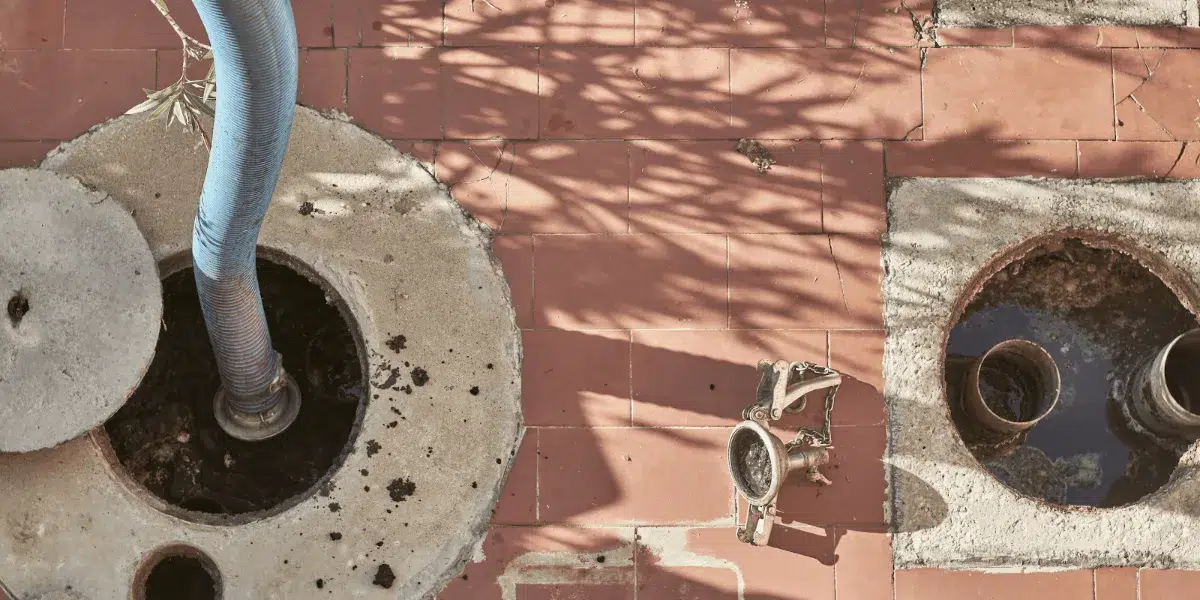
Suffolk County cesspool systems typically include a primary pool where solids settle, and one or more overflow or leaching pools where liquid disperses into the surrounding soil. When the leaching pool fails because the soil around it has become saturated or clogged with years of use, the liquid has nowhere to go and backs up through the entire system.
This one gets misread as a plumbing issue all the time. After a significant storm, water-saturated soil prevents the cesspool from draining outward, and pressure builds up inside the system. Homeowners notice slow drains or gurgling throughout the house and assume it’s a pipe problem. It’s usually the ground conditions around the cesspool.
Myth: If I can clear one drain, the problem is solved. Reality: Chemical drain cleaners clear only the immediate pipe. They do nothing for cesspool blockage and can disrupt the bacterial balance your system depends on.
Myth: Gurgling drains are always a plumbing issue. Reality: Gurgling throughout the house, especially when multiple fixtures react to each other, is a classic sign of a failing or overfull septic system.
Myth: If the yard looks fine, the cesspool is fine. Reality: A cesspool can be failing internally long before surface signs like wet grass or odors become visible.
Work through these questions before you call a plumber or a septic service:
If you answered yes to two or more of these, the problem is most likely in the cesspool or septic system, not in your indoor plumbing. Calling a plumber first will be an extra expense that doesn’t address the root cause.
Fun Fact
Long Island has one of the highest concentrations of cesspool systems in the United States. Homes built before the 1970s across Suffolk County are especially likely to have older brick or precast concrete cesspool systems rather than modern septic tanks. This is a major reason why misdiagnosis between plumbing and septic issues is so common in the area.
Calling the wrong service costs time and money, but the bigger risk is that it delays the right fix. A cesspool that’s signaling trouble through slow drains and gurgling sounds is a cesspool that’s on its way to a full backup or overflow. Every week that passes while the wrong problem gets addressed is a week the actual issue gets worse. In some cases, especially with leaching pool failure or serious root intrusion, a delayed response can mean a much more extensive and expensive repair down the road.
If you’re seeing the signs but can’t figure out where the problem actually lives, Bay Area Sewer & Drain Service is the team to call. We serve homeowners across Eastport, Westhampton, Southampton, Hampton Bays, Riverhead, and throughout the East End of Long Island with expert cesspool inspection, drain diagnostics, and complete septic system services.
We’ll identify whether you’re dealing with a simple drain issue or a septic problem and give you a clear, honest answer before any work begins. Call us or visit bayareacesspool.com to book your inspection or request a free estimate today.